Skip to content

Your next case.

Practise clinical cases with simulated patients.

Start practising
You ask.Your patient
answers.
For healthcare learners

History

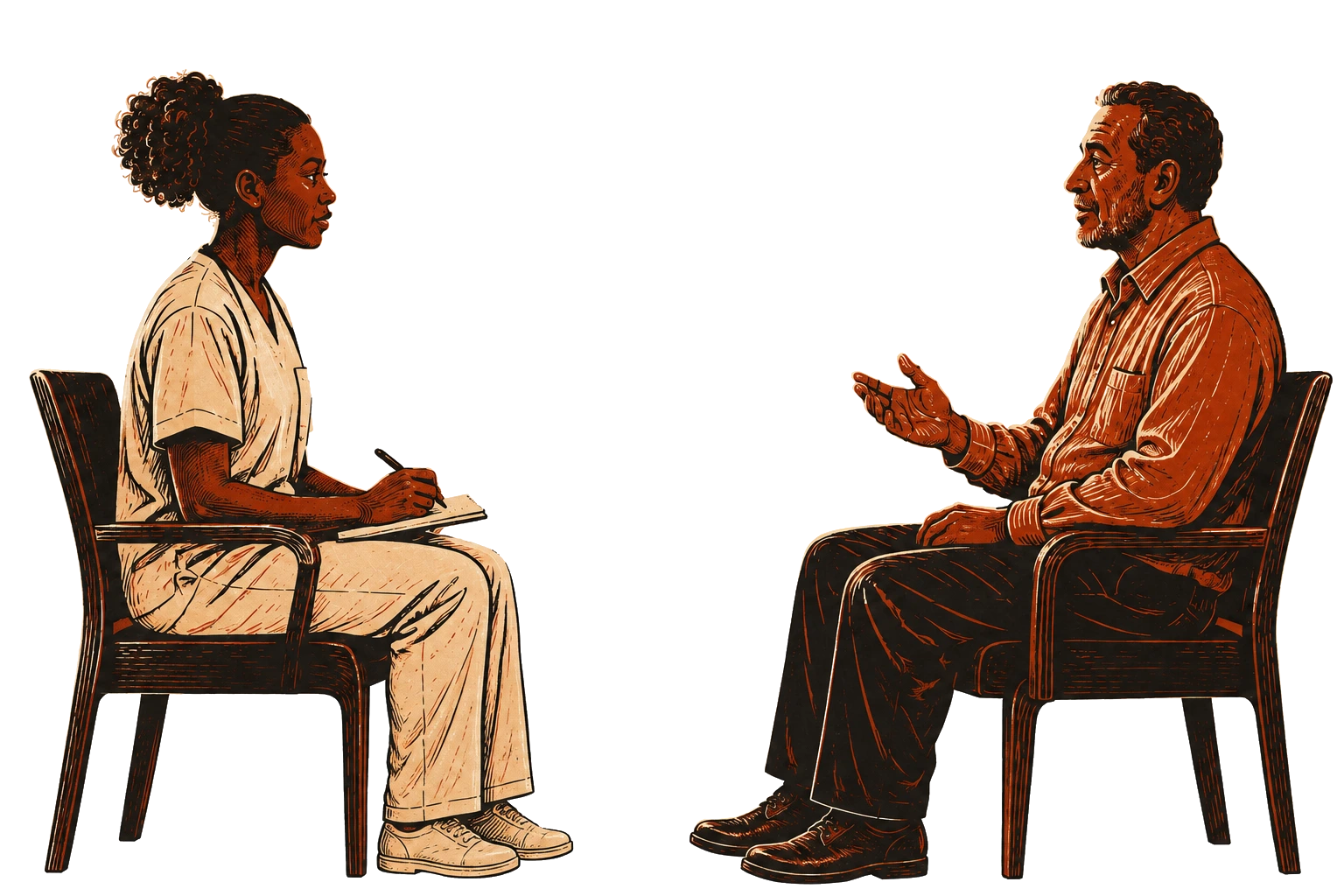
  1. You: What brought you in today?
  2. Patient: I've been getting out of breath on my walks. It's not like me.
  3. You: When did you first notice it?
  4. Patient: A few weeks ago. Now I have to stop halfway up the hill.
  5. You: How else has this affected your day?
  6. Patient: I'm exhausted. My periods have been much heavier lately, too.

Reasoning

01Leading diagnosis

Suspected iron-deficiency anaemia

Why this fits

Progressive exertional breathlessness and fatigue, with heavy menstrual bleeding, suggest iron deficiency from chronic blood loss.

Confirm with blood tests; assess the cause of the bleeding.

02Differentials

Heart failure

Why still possible

Exertional breathlessness remains compatible. Clarify orthopnoea, ankle swelling and cardiac history; these have not yet been explored.

Asthma

Ask about episodic wheeze, chest tightness and triggers before ranking this alternative.

03Examination plan

Assess severity

Findings sought

Pulse, blood pressure, respiratory rate and oxygen saturation; look for pallor and signs of haemodynamic compromise.

Test the alternatives

Look for raised JVP, oedema, crackles or wheeze. Further examination should follow the bleeding history.

04Investigation plan

Full blood count and ferritin

What these clarify

Assess haemoglobin, red-cell indices and iron stores. Interpret ferritin in context if inflammation is suspected.

Investigate the bleeding source; further tests should follow the history and examination.

05Management plan

Replace iron and address bleeding

In a sensible order

Assess stability first. If iron deficiency is confirmed, start oral iron and arrange assessment and treatment of the heavy bleeding.

Review and safety-net

Recheck haemoglobin in 2-4 weeks. Escalate for chest pain, syncope, breathlessness at rest or ongoing heavy bleeding.

Feedback

EXAMINER TRANSCRIPT NOTES
Opening
What brought you in today?
A useful open invitation.

You let the patient describe the problem in their own terms. Keep that opening before moving to focused questions.

Safety check
I've been getting out of breath on my walks. It's not like me.
Establish severity early.

Clarify breathlessness at rest, chest pain and collapse before continuing a routine history. These have not been assessed in this excerpt.

Timeline
When did you first notice it?
Pin down the timescale.

You asked about onset, but "a few weeks" remains imprecise. Clarify duration and whether the deterioration has been steady or sudden.

Functional baseline
A few weeks ago. Now I have to stop halfway up the hill.
Quantify what has changed.

Compare usual walking distance with current stopping distance, and ask whether symptoms settle with rest. This gives a baseline for review.

Communication
How else has this affected your day?
Follow the patient's reply.

This opens the conversation beyond a symptom checklist. Explore what the patient volunteers before switching to the next diagnostic question.

Possible bleeding source
I'm exhausted. My periods have been much heavier lately, too.
Explore the bleeding, not just the fatigue.

Clarify duration, flooding, clots and bleeding between periods. Menstrual loss is a possible cause, not a reason to stop investigating.

OVERALL FEEDBACK

A useful opening. Keep testing the explanation.

You elicited progression and a possible bleeding source. Next, establish severity and test the working diagnosis rather than closing early.

NEXT TIME

Quantify the bleeding and explore cardiorespiratory alternatives.

Then defend a decision in Follow-up, or change the scenario in What-if.
Fictional case · Scroll to exploreFollow-up & What-if
KEEP GOING

The case isn't over.

A new question. A different turn. Put your thinking to the test.

01 / FOLLOW-UP

Defend your decision.

Mechanisms & interpretation

A patient has microcytic anaemia, a raised CRP and ferritin within the laboratory reference range. Can iron deficiency be excluded? Explain how hepcidin changes iron availability, and which findings distinguish absolute iron deficiency from inflammation-related iron restriction.

Explain your thinking… Type or speak
02 / WHAT-IF

Change one detail.

Treatment failure

What if haemoglobin has not risen after four weeks of oral iron, despite reported adherence? How would you distinguish ongoing blood loss, malabsorption and an incorrect diagnosis, and what would justify intravenous iron rather than another oral course?

How would your approach change? Type or speak
Good to know.

Take a seat.

Your next conversation starts here.

Start practising